


 Why do we need this? So we can get in touch and help find you nursing homes for your needs.


100% Obligation Free
Zero Additional Cost to You
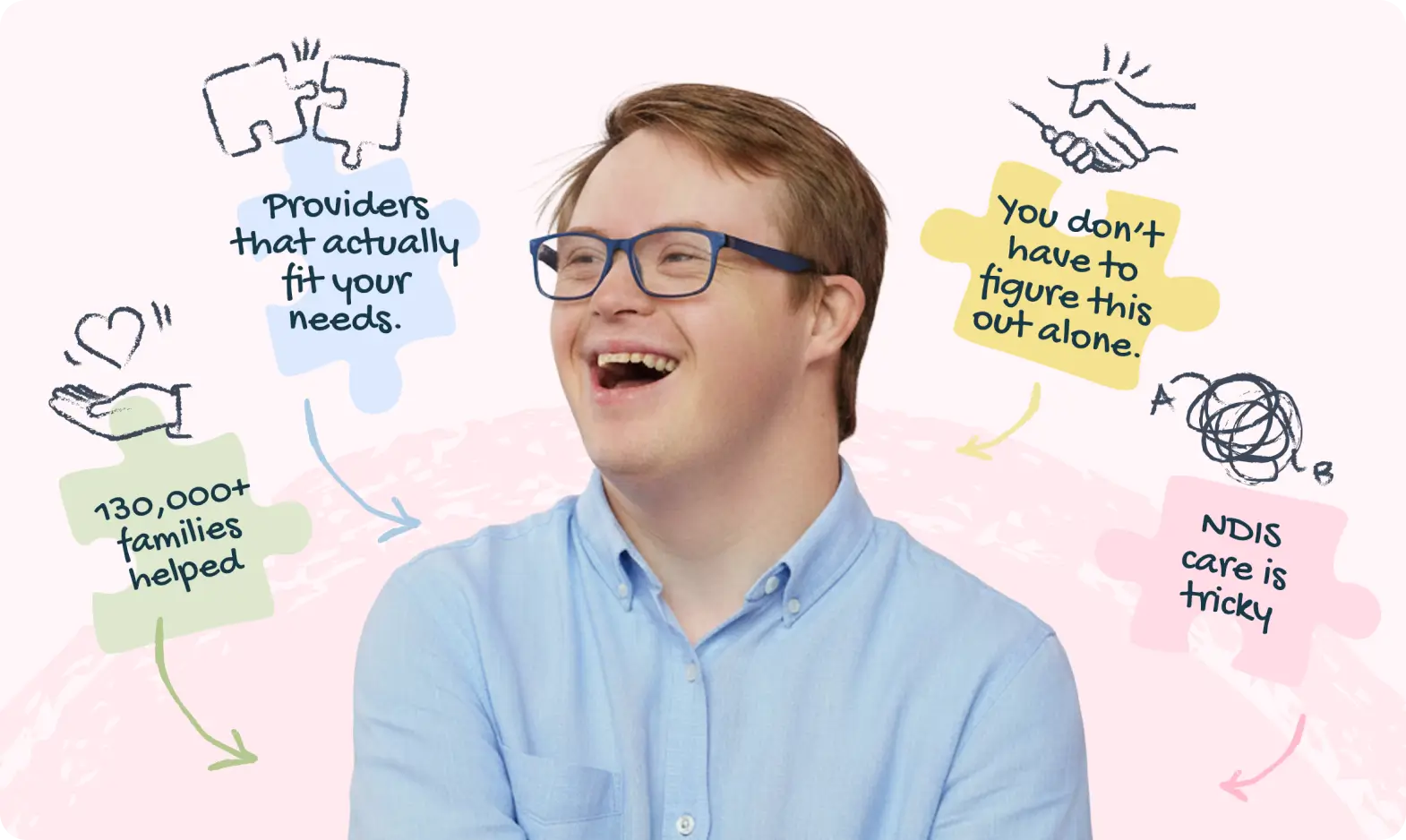
The National Disability Insurance Scheme (NDIS) can feel like a maze of forms, acronyms and rules – especially when you’re trying to sort out support for yourself or someone you love. This guide walks you through the whole journey in plain English: working out if you qualify, getting set up, understanding your funding, and finding the right provider once your plan is approved.
CareAbout isn’t a disability provider and we’re not part of the government. We’re an independent service that helps Australians cut through the confusion and connect with carefully screened registered NDIS providers right across the country, and it’s completely free for you to use.
The National Disability Insurance Scheme (NDIS) is an Australian Government scheme that funds support for people with a permanent and significant disability. Rather than a one-size-fits-all service, it gives each participant an individual budget and the freedom to choose how, when and from whom they receive support – what the scheme calls “choice and control.”
It’s run by the National Disability Insurance Agency (NDIA), with local partners on the ground to help people apply and plan. The scheme supports hundreds of thousands of Australians, and the funding you receive is based on your support needs – not your income or assets. The NDIS isn’t means-tested.
You may qualify for the NDIS if you’re under 65 when you apply, you’re an Australian citizen, permanent resident or hold a Protected Special Category Visa, you live in Australia, and you have a permanent and significant disability that substantially affects your everyday activities – or you meet the early intervention requirements.
1. Age: You must be under 65 at the time you apply. This is a firm cut-off – if you apply even a little after your 65th birthday, you won’t be able to join, regardless of how significant your disability is.
2. Residency: You must live in Australia and be an Australian citizen, the holder of a permanent visa, or the holder of a Protected Special Category Visa.
3. Disability: You need to have a disability caused by an impairment – intellectual, cognitive, neurological, sensory, physical or psychosocial – that is, or is likely to be, permanent, and that substantially reduces your ability to do everyday activities like communicating, moving around, socialising, learning or self-care.
4. Or Early Intervention: There’s more than one way in. You may also be eligible under the early intervention pathway if getting support now would reduce how much support you’ll need in the future. This pathway is common for children and for people with progressive conditions.
Important: Having a particular diagnosis does not automatically qualify you. The NDIA looks at the functional impact – how your condition actually affects your daily life, not the label on it. That’s why strong, specific evidence from your treating professionals matters so much. If you’d like to check before you apply, the NDIS has a free online Access Checklist (simply visit here for a full overview of Eligibility Requirements), or you can call the NDIA on 1800 800 110.
Please note: If you’re not approved – A “no” isn’t always the end. You can ask for an internal review within three months, supply stronger functional evidence, or, if your circumstances change and you’re still under 65, you’ll need to apply again. Many decisions are overturned once better evidence is provided.
The NDIS funds supports that are considered reasonable and necessary – directly related to your disability, good value, and likely to help you pursue your goals. Funding is grouped into budgets so it’s clear what each pool of money is for.
| Budget | What it covers | How flexible |
|---|---|---|
| Core Supports | Everyday help – personal care, household tasks, consumables, transport, and getting out into the community. | Most flexible. You can usually move funding between Core categories (transport is often the exception). |
| Capacity Building | Building skills and independence – therapies, employment support, and support coordination to help run your plan. | Less flexible. Each category is generally ring-fenced for its purpose. |
| Capital Supports | Higher-cost, one-off items – assistive technology (wheelchairs, communication devices) and home or vehicle modifications. | Least flexible. Funds are tied to specific approved items and usually need quotes. |
Participants on the NDIS’s newer system may also see a fourth budget, Recurring, for regular fixed payments such as transport. As a general rule, the NDIS won’t fund everyday living costs (like rent or groceries) or supports that belong to another system such as health or aged care.
When your plan is approved, you choose how your funding is managed. This decision affects which providers you can use, so it’s worth understanding your options.
This is one of the most common points of confusion we hear about, and it’s an important one for older Australians and their families.
You can’t join the NDIS for the first time after you turn 65. If you acquire a disability later in life, your support comes through the aged care system, and is accessible via My Aged Care – rather than the NDIS.
But if you were already an NDIS participant before turning 65, you don’t get pushed out on your birthday. You can choose to stay on the scheme, and your plans continue much as before. You can’t, however, receive NDIS and aged care funding for the same supports at the same time.
Special Note: Think carefully before switching: For people with high or complex disability-related needs, the NDIS often funds support that the aged care system simply isn’t designed to provide. The two systems work differently – the NDIS isn’t means-tested, while aged care contributions are based on your income and assets. Once you move from the NDIS into permanent residential aged care after 65, you generally can’t return to the scheme, so it’s a decision worth taking your time over.
Not all providers operate the same way. Understanding the difference helps you choose support with confidence.
| Registered providers | Unregistered providers | |
|---|---|---|
| Oversight | Approved and monitored by the NDIS Quality and Safeguards Commission. | Not assessed by the Commission, though still bound by the NDIS Code of Conduct. |
| Standards & audits | Must meet the NDIS Practice Standards and pass independent audits. | No audit or Practice Standards requirement. |
| Worker screening | Required to screen their workers. | Not required by the Commission. |
| Who can use them | Any participant, including NDIA-managed plans. | Generally only self-managed or plan-managed participants. |
Registered providers have cleared a higher bar on safety, quality and accountability, which is why CareAbout focuses on connecting you with registered providers. Registration sets the floor, though, not the ceiling. On top of registration, we look for providers who genuinely deliver: responsive service, well-trained staff, transparent fees and a person-centred approach.
The scheme is going through its biggest reforms in years.
Reforms move quickly, so for the latest detail always check the official NDIS website or speak with the NDIA.
If you have an active NDIS plan, CareAbout can connect you with a carefully screened registered provider suited to your needs, goals and preferences – across Australia, completely free, with no obligation to proceed.
How long does it take to get an NDIS decision? Once the NDIA has your complete application and all supporting evidence, it aims to make an access decision within 21 days. Gathering thorough evidence up front is the best way to avoid back-and-forth that can stretch the timeline.
Does it cost anything to apply for the NDIS? No. There’s no fee to apply for the NDIS. CareAbout’s provider matching service is also free for participants and families – we’re paid a referral fee by a provider only after a successful introduction.
What if I’m over 65 and have a disability? If you didn’t have an NDIS plan before turning 65, you can’t join the scheme. Your support is instead provided through the aged care system via My Aged Care. If you’d like help working out your options, our Care Advisors can point you in the right direction.
Can I use any provider I want? It depends on how your plan is managed. Self-managed and plan-managed participants can use both registered and unregistered providers. If your plan is NDIA-managed, you must use registered providers.
What’s the difference between Core, Capacity Building and Capital funding? Core covers everyday assistance and is the most flexible. Capacity Building funds therapies and skill-building to grow your independence. Capital covers higher-cost items like equipment and home modifications, and is the least flexible. Each budget has its own rules about what it can be spent on.
Do I need to be approved for the NDIS before contacting CareAbout? To be matched with a provider, you’ll need an active NDIS plan, since that’s what funds your supports. If you’re still working out eligibility or which system suits you, simply get started online here, and we’ll help you understand where to start.*
*The information provided in this article is general information only and is current as of 2026. It isn’t legal, medical or financial advice, and NDIS rules can change. Always confirm current requirements with the NDIA at ndis.gov.au or on 1800 800 110. CareAbout is an independent service and is not affiliated with, funded by, or endorsed by the Australian Government.
To commence finding a registered NDIS provider, simply visit here to get started. We’ll match you with a registered NDIS provider from our trusted network. They’ll reach out the way you prefer – phone, email or text, to introduce themselves and arrange a time to talk. You stay in control the whole way through, and if a provider isn’t the right fit, we’ll help you explore other options.
Our service is free for you because we receive a referral fee from a provider only after a successful introduction – never from you, at any stage.