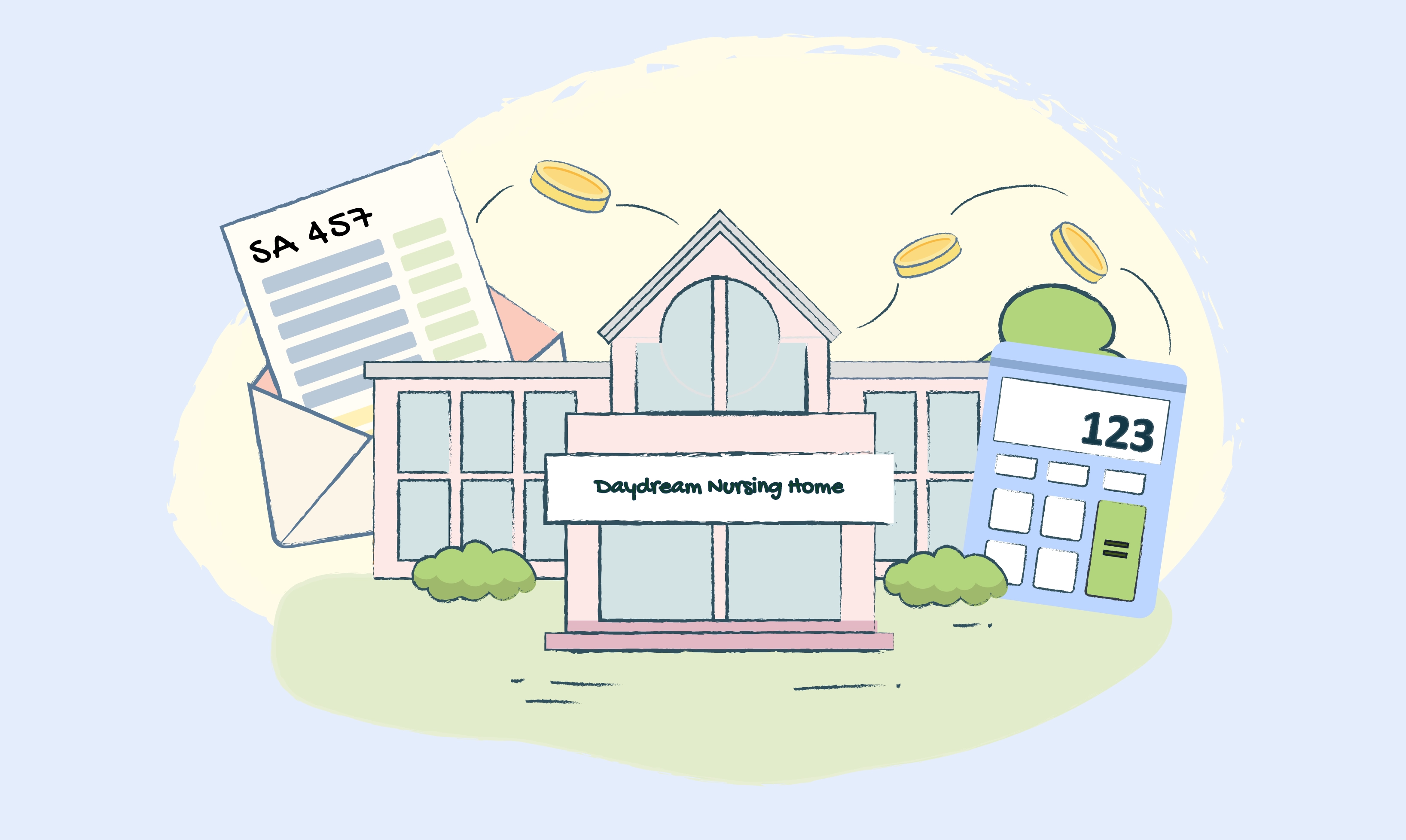
SA457 Form: What It Asks and What Your Fee Letter Means
The SA457 sets what you pay in an aged care home. Who needs it, the questions that catch families out, and what your fee advice letter means.
Welcome to the CareAbout blog, your trusted guide to aged care and home care services in Australia.
Explore expert advice, helpful tips, and the latest industry updates to support you in finding quality care for yourself or your loved ones.

The SA457 sets what you pay in an aged care home. Who needs it, the questions that catch families out, and what your fee advice letter means.

The SA456 sets what you pay toward Support at Home. Who needs it, the questions that catch people out, and what each of the three outcomes costs you.

Carer Payment is $1,237.70 a fortnight, not $162.60. See the current rates, who qualifies, and why you should claim both carer payments together.

You don't have to sell the family home to pay for aged care in most cases. Only $219,858.40 of it counts, and only in residential care. The rules, plainly.

Everyday acts of love, quiet strength, and tireless support. This National Carers Week (11 - 17 October), CareAbout honours and thanks you...

Caring for ageing parents while raising your own kids? What support your parent can get, what they will pay, and the free help available to you as the carer.
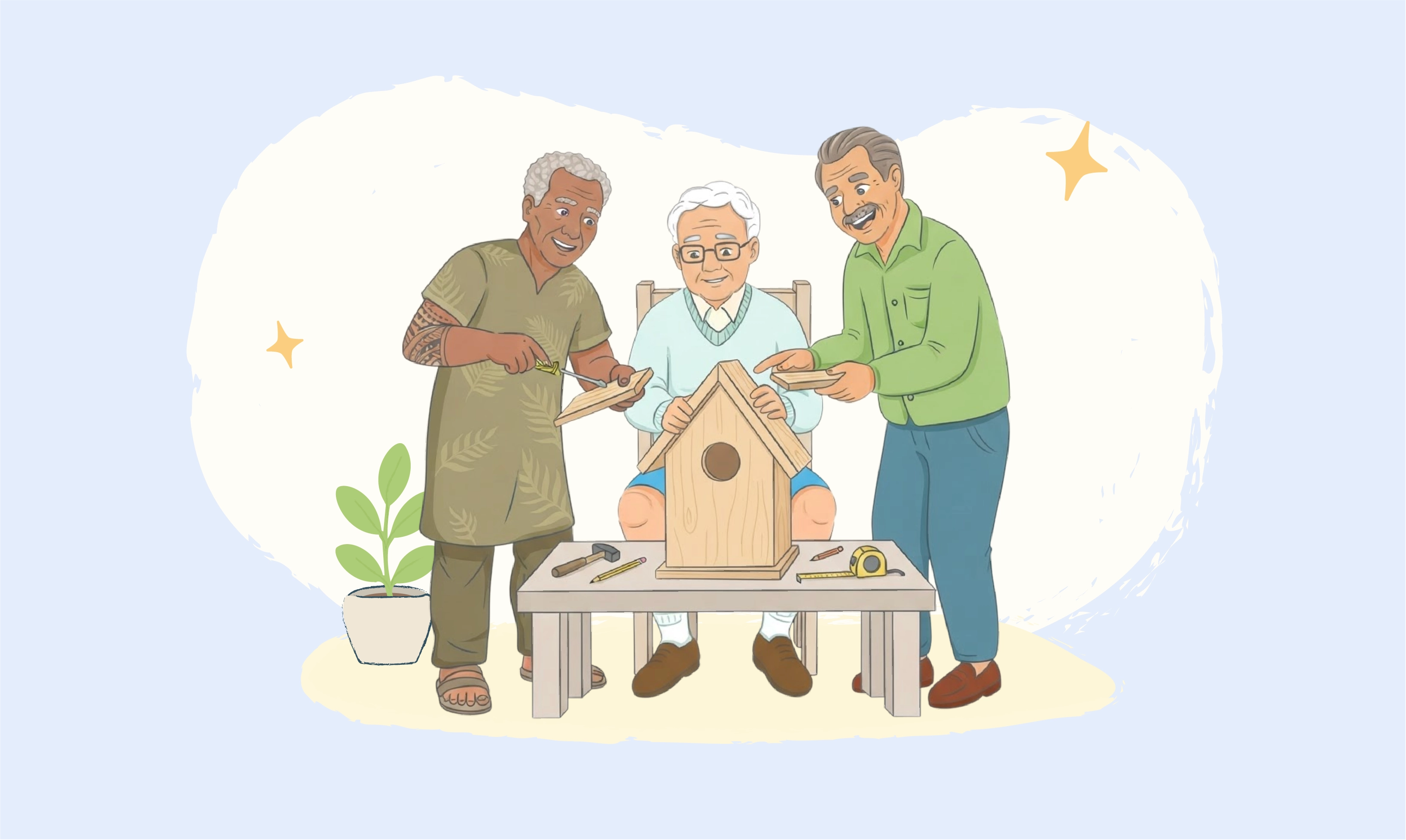
Connection is part of good care. Why CareAbout sponsors the Men's Shed, what a Men's Shed actually is, and how to find one near you.

Unhappy with your home care provider? How to complain, what to do if they will not respond, how to get a free advocate and how to switch providers.
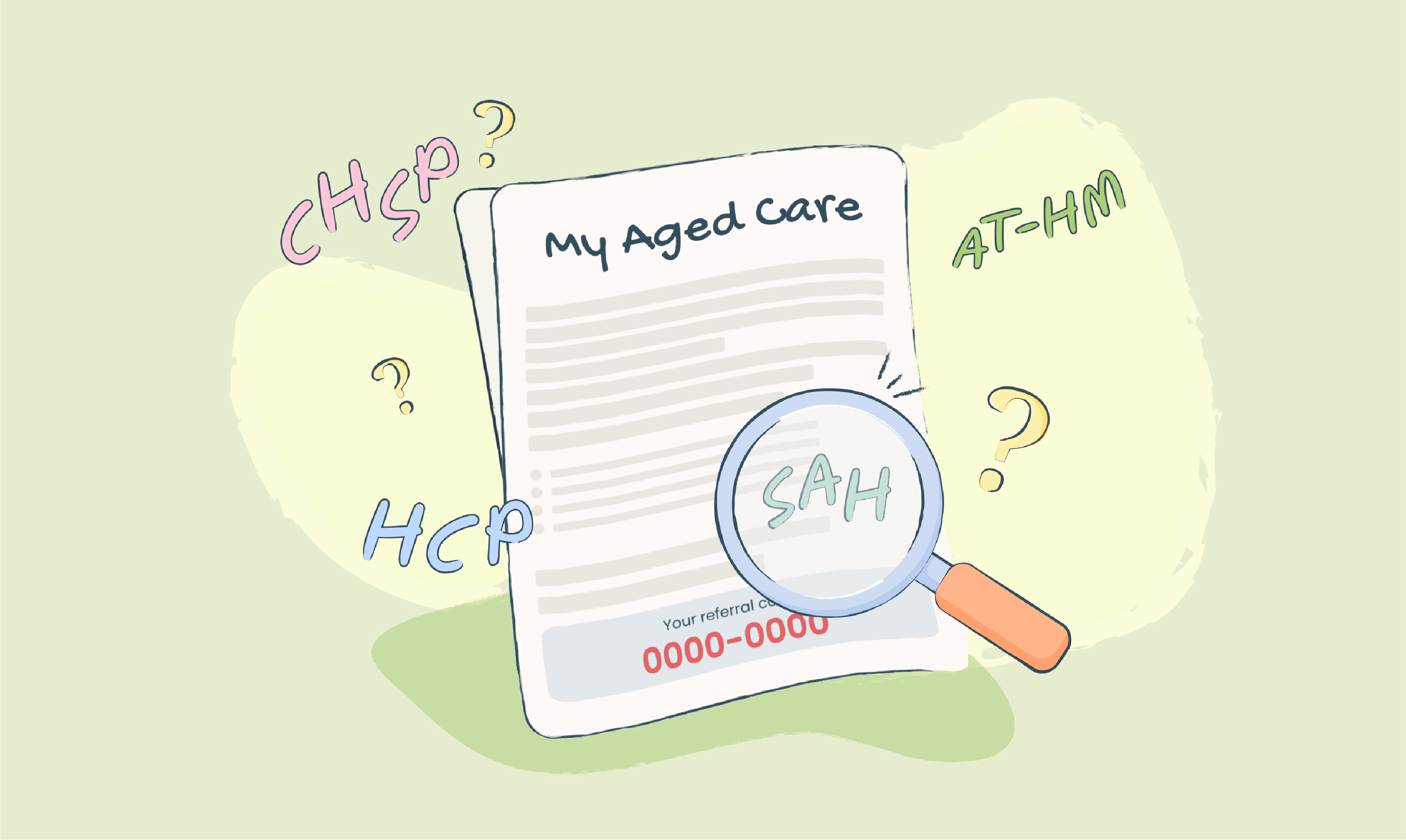
ACAT, SaH, HCP, CHSP and AT-HM explained in plain English: what each acronym means, where you will see it, and what it means for your care.

Stuck between My Aged Care and the assessment team? Who is holding your request, the timeframes you can hold them to, and what happens after approval.

AT-HM funding explained: the assistive technology and home modification tiers, from under $500 to $15,000, and what to do if that's all you've been given.

Your contribution is worked out on your income and assets, your home is exempt, and hardship assistance exists. What to do when the numbers don't work.

What you actually pay under Support at Home. Clinical care is fully funded, and your share of everything else depends on your income and assets.