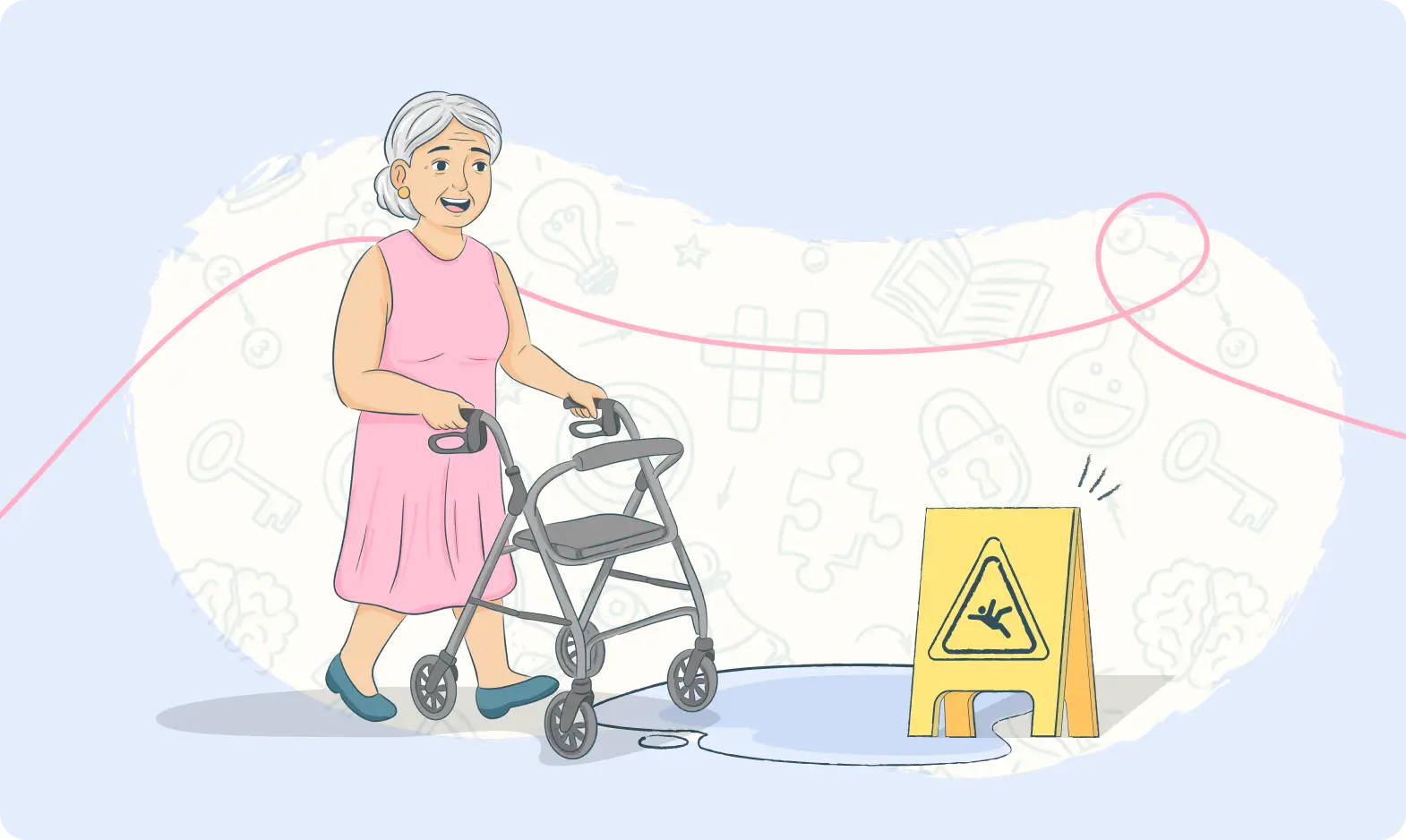
April is Falls Prevention Month in Australia, and the 2026 theme couldn’t be more fitting: “Let’s Talk About Falls – Staying Safe Starts with a Chat.”
Because here’s the truth that too many families are reluctant to say out loud: falls are one of the biggest threats to the health, independence and wellbeing of older Australians. And yet, we so rarely talk about them until after something has already gone wrong.
At CareAbout, we think it’s time to change that.
The Reality of Falls in Australia
Falls aren’t a minor inconvenience. They are the leading cause of injury-related hospitalisation for older Australians, and the consequences – broken bones, head injuries, loss of confidence, long hospital stays – can be life-changing.
Consider these figures:
- 1 in 3 Australians aged over 65 falls at least once every year
- In New South Wales alone, almost 30% of people over 65 experience a fall annually
- Once someone has had one fall, their risk of falling again increases significantly
- Falls account for over 37% of all injury-related deaths in Australia
- And perhaps most importantly: the majority of falls are preventable.
Why We Don’t Talk About It — and Why We Should
There’s a real stigma around falls. Many older people fear that admitting they’ve fallen — or that they’re worried about falling — will mean losing their independence. Families tiptoe around the subject for the same reason.
But the 2026 April Falls campaign makes a powerful point: talking about falls isn’t about taking away independence. It’s about protecting it.
When you notice an older loved one holding onto furniture as they walk, or you spot unexplained bruising, or they seem more hesitant on their feet than they used to be — that’s the moment to start a gentle, caring conversation. Not to alarm them, but to help them access the right support before a fall happens.
A simple chat can open the door to small, practical changes that make an enormous difference.
What Actually Prevents Falls?
The good news is that falls prevention is well-researched and genuinely effective. Here’s what the evidence tells us:
1. Exercise: Especially Balance and Strength Training
This is the single most effective intervention. Research shows that regular exercise can reduce the risk of falling by up to 23% – but it needs to be the right kind of exercise, done consistently.
Activities that work particularly well include:
- Tai chi: Gentle, flowing movements that build balance and coordination, and is world-renowned for increased mobility (especially in older people).
- Yoga: Improves flexibility, core strength and body awareness.
- Strength training: Maintaining muscle mass is critical as we age.
- Balance-Specific Exercises: Simple things like standing on one leg while waiting for the kettle, or walking heel-to-toe.
Adults should aim for 30–60 minutes of physical activity most days, including exercises that specifically target strength and balance. It’s never too late to start — improvements can happen at any age.
2. Home Safety Modifications
Most falls happen at home. A few low-cost, practical changes can dramatically reduce risk:
- Install grab bars, which are commonly needed in the bathroom and near the toilet.
- Improve lighting throughout the home, especially in hallways and/or along the stairs.
- Remove trip hazards, everywhere from loose rugs, cords across walkways, to clutter on floors.
- Check footwear to ensure on-slip, well-fitted shoes (even indoors), which matter more than people realise.
- Ensure chairs and bed height are appropriate as getting up and sitting down safely is crucial.
- Check that mobility aids (walkers, canes) are in working condition and are being used correctly.
- Organise a home assessment, which can be performed by an Occupational Therapist (OT) to identify risks you might not even notice – this may be part of your Support at Home funding, which our CareAbout team can walk you through.
3. Medication and Health Reviews
Certain medications, particularly sedatives, blood pressure medications and some antidepressants, can increase fall risk through dizziness, drowsiness or changes in blood pressure when standing. A regular medication review with a GP or pharmacist is a simple but important step.
Other health factors to review regularly include:
- Vision: Even mild deterioration affects depth perception and balance.
- Hearing: Hearing loss affects spatial awareness.
- Foot health: Pain, numbness or poorly fitted footwear all contribute to instability.
- Vitamin D levels: Low vitamin D affects both muscle strength and bone density.
4. A Personalised Falls Risk Assessment
Not all falls risk is the same. A physiotherapist or GP can use validated screening tools to assess an individual’s specific risk factors and develop a personalised falls prevention plan. This is particularly important for people living with conditions like Parkinson’s disease, stroke, multiple sclerosis or dementia, where balance and coordination may already be affected.
The Role of Aged Care Support
For older Australians still living at home, a Home Care Package can fund a range of falls prevention supports, including physiotherapy, occupational therapy assessments, home modifications, and exercise programs. If your loved one is eligible for aged care support but hasn’t yet accessed it, now is a very good time to explore what’s available.
The system can feel complex and overwhelming – and we know, because we hear from families every day who are navigating it. That’s exactly where CareAbout can help. We work with families to understand what their loved one needs, find the right providers, and make sure they’re getting the most out of their funding.
Start the Conversation Today
This April Falls Month, we’re encouraging every Australian family to have the chat.
You don’t need to make it dramatic. It might be as simple as:
“Mum, I noticed you’ve been a bit unsteady lately. Can we talk about what might help?”
Or:
“Dad, I’d love for us to look at what we can do around the house to make things a bit safer.”
Falls don’t just happen. And with the right support, many of them don’t have to happen at all.
Thinking about falls prevention support for yourself or your loved one? CareAbout can help you find the right care, fast. We’re here to help you navigate the aged care system with confidence, so you can reside safely and independent as home.