The Case Against the IAT Algorithm: Australians Deserve Better
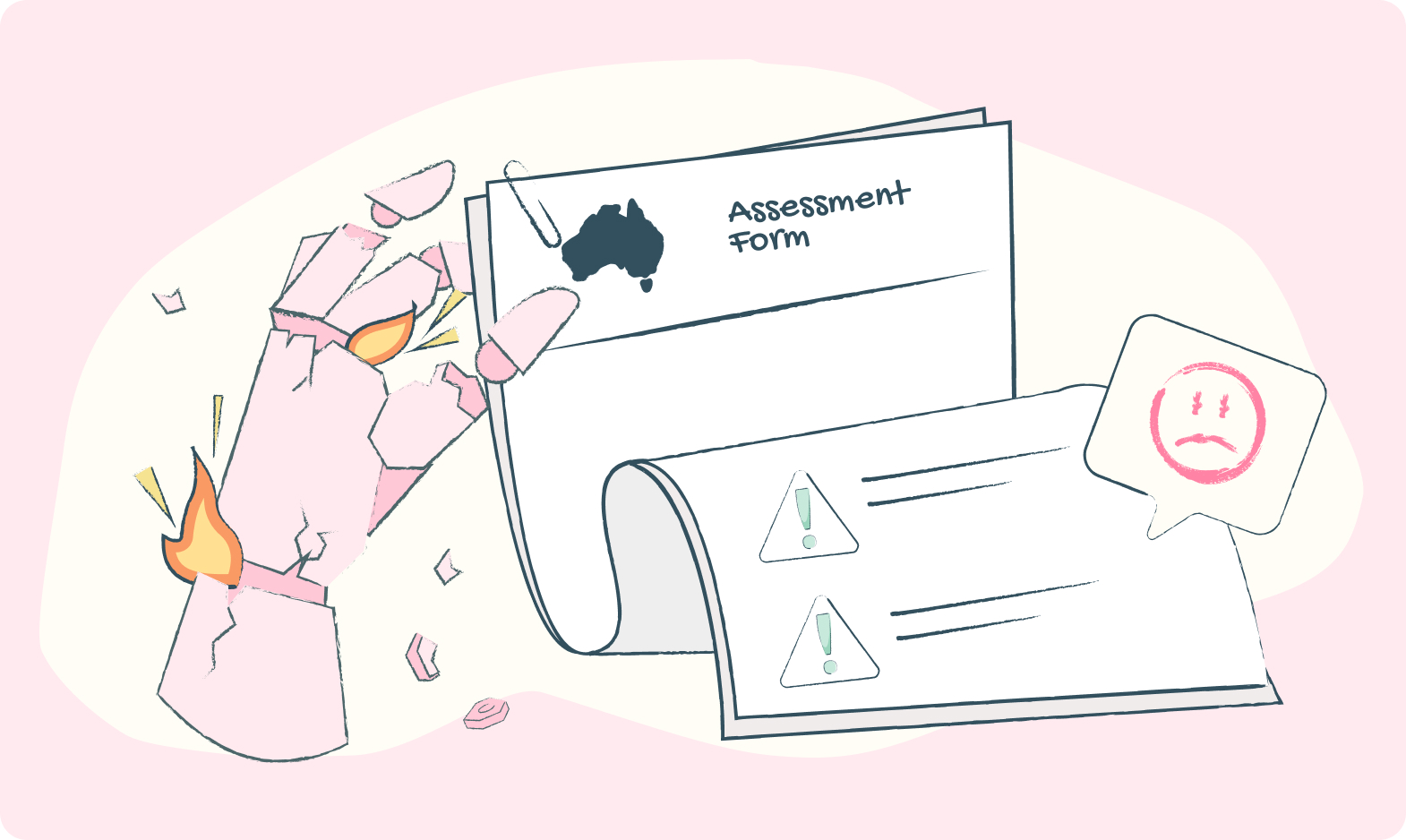
Something’s really not sitting right with the way aged care assessments are being handled in Australia right now, and families, clinicians, and advocacy groups are speaking up.
In a recent radio interview with ABC Melbourne, Sam Rae, Minister for Aged Care and Seniors, upheld that the Integrated Assessment Tool (IAT) is “doing a good job”, adding, “it’s a much improved system.” However, there has been an overwhelming response from the community that suggests otherwise. Let’s explore what the IAT is and what it’s supposed to do.
The Integrated Assessment Tool (IAT), a new algorithm that now determines how much home care support older Australians receive under the new Support at Home program, has come under growing scrutiny. The tool was designed to make the aged care assessment process faster and more consistent. But real-life participants and critics alike, report that it’s actually doing the opposite; locking people into funding levels that don’t reflect their actual needs, and sidelining the clinicians who know them best.
So what’s going on? Let’s break it down.
What Is the Integrated Assessment Tool?
The IAT is a rules-based algorithm introduced in mid-2024 as part of Australia’s Single Assessment System. When an assessor meets with you (or your loved one) to evaluate care needs such as mobility, cognition, and daily living, they enter their observations into the system. The IAT then assigns one of eight classification levels, which determines how much Support at Home funding a participant is eligible for.
The idea behind it? To standardise aged care assessments across the country so that outcomes are fairer and more consistent, regardless of where you live or who assesses you.
In theory, that sounds reasonable. In practice, it’s become deeply contentious.
Where the Problems Start: Assessors Sidelined to Data Entry
Here’s the core issue: When the new Aged Care Act took effect on 1 November 2025, the ability for assessors to override the algorithm’s decisions was significantly restricted.
Before that point, clinicians could use their professional judgement to adjust a classification if the algorithm got it wrong. A May 2025 workforce guide for the Single Assessment System still permitted those overrides. But updated guidelines released in November 2025, i.e. the Assessor Portal User Guide 6 and Assessment Manual v8.1, quietly pulled that capability back.
Now, even if an experienced clinician believes someone clearly needs more support, the algorithm’s output largely stands. The only exceptions are limited scenarios such as Restorative Care or End-of-Life pathways. Not to mention, the countless number of clinical notes taken by assessors, which were either not inputted correctly or even recorded in the system.
The assessor role is narrowed to a largely administrative function, with limited scope for professional discretion, which in turn, also undermines their clinical expertise.
The Human (and Horrifying) Cost: Where Incorrect Assessments Equate to Compromised Care
The numbers tell a confronting story.
The Older Person’s Advocacy Network (OPAN) reported handling approximately 7,500 requests for information and advocacy related to home support in the three months after the IAT was fully integrated; roughly a 50 per cent increase on the previous quarter.
Between 1 November 2025 and 23 January 2026, the Department of Health received 414 formal requests for review of IAT results. Of those, 167 related to classification levels, 133 to priority categories, and 36 to both.
And reassessment processes? They can take up to 90 days – an incredibly long time to wait when you’re managing complex care needs with insufficient support.
The cases being reported are difficult to hear. One woman described her husband, living with severe mobility limitations and chronic pain, being deemed ineligible for additional support despite medical evidence showing his condition had deteriorated. In another case, a woman with vascular dementia requiring around-the-clock care was classified as having ‘no impairment’.
These aren’t edge cases. They point to a pattern.
When History Repeats Itself: The “Robodebt” Comparison
The “Robodebt” comparison was inevitable. Whether it’s fair is a separate question, but it is being made by people who cannot easily be dismissed.
Roland Naufal, Contributor at Invox, who spent three decades in the disability sector and consulted on the original NDIS design, has identified what he calls shared DNA between the two systems: opaque decision logic, limited scope for human override, and institutional confidence in outputs that are causing real harm.
Independent MP Monique Ryan has asked in Parliament, publicly, whether this constitutes “robo aged care.” Anne Connolly of the ABC, who has a track record of holding the aged care sector to account, examined the same question during her report on 24 March 2026; summarising Support at Home as simply, ‘unfit for purpose.’
Adding to the list, Peter Willcocks, a member of the Department of Health aged care panel, has also compared the new IAT system to the former Robodebt tragedy (2023), specifically where clinical assessors cannot provide an assessment different to what the algorithm concludes (even if they disagree).
The concern is not that the IAT will replicate Robodebt exactly, it’s that the conditions for similar harm are already in place.
How the Australian Government Responds
Aged Care Minister Sam Rae has responded to the criticism, stating that the IAT ‘does not replace assessor input’ and emphasising that assessors continue to play a critical role in the process. In a radio interview on ABC Melbourne Drive on 24 March 2026, the Minister acknowledged the concerns being raised.
However, critics argue there’s a gap between the government’s assurance and what’s happening on the ground. If assessors can’t meaningfully override algorithmic outcomes, the question remains: how much input do aged care assessors truly have?
What This Means for You and Your Family
If you or someone you love is going through an aged care assessment right now, this news might feel unsettling. That’s understandable.
Here are a few things worth knowing:
- You have the right to request a reassessment: If you believe the classification doesn’t reflect your (or your loved one’s) actual care needs. It’s not a quick process, but it is an option – please see our guide for How to Navigate Your ACAT Assessment and Reassessment here.
- Document everything: Medical reports, GP letters, allied health assessments; the more evidence you can bring to an aged care assessment, the stronger the case for accurate classification.
- Ask your assessor questions: You’re entitled to understand how your classification was determined and what factors were considered.
- Reach out to an advocate: The Older Person’s Advocacy Network (OPAN) can support you if you feel the assessment outcome was unfair. Call 1800 700 600.
- If My Aged Care has got it wrong before, you’re not alone, and there are steps you can take.
Where to From Here? You’re Never Alone.
No one is arguing against consistency in aged care assessments. Families across Australia deserve a system that’s fair, transparent, and efficient. But consistency at the expense of accuracy, where an algorithm overrides the professional standing right in front of you, isn’t fairness.
This is a story that’s still unfolding. We’ll continue to follow it closely and share updates as they come. Because when it comes to getting the right care for the people you love, the details matter, and so does your voice.
CareAbout is here to help you navigate the complex, overwhelming, stressful and often isolating world of aged care with the support you need. We exist because we believe no one should ever feel alone when seeking the quality aged care they deserve. So if you need assistance, whether for yourself or on behalf of a loved one, our dedicated, expert-led team of Care Advisers are here to CareAbout you. Simply freecall us at 13 13 00 (9am – 5pm AEST).