Palliative Care at Home: How To Approach the Conversation Gently

When the time comes, you’ll feel it – that quiet knowing that the conversation can’t be put off any longer. Nothing truly prepares you, and there’s no right way to begin. All you need is a way in. Here’s a gentle guide to help you start.
It’s there in the quiet moments – on the drive home from a hospital visit, in the stillness at 2am, in the small ache of watching a parent pause over a medication packet they used to manage without thinking. There are things you want to ask them – about what would bring them comfort, about what they’d gently want to decline, and of course, about how they hope this tender, final chapter of their story unfolds.
And every time you go to begin, the words seem to dissolve before they reach you.
It isn’t that you don’t care – it’s that you care so deeply. To raise it feels like naming something the whole family has been holding just out of view: That someone you love so dearly won’t always be here – and so we wait. We tell ourselves there’s still time, we promise ourselves we’ll find the right moment – after Christmas, after the next appointment, on one of their better days.
But instead, the conversation find us instead – and most often, when we’re not prepared; in a hospital room, under fluorescent lights, with kind but unfamiliar faces asking questions none of us were ready to meet.
There is a gentler way. And it can happen at the kitchen table, with a warm cup of tea between you, long before anything feels urgent. And it begins, quite simply, with one question. This National Palliative Care Week, let’s talk about this important subset of Palliative Care: The End-of-Life Pathway.
Why We Naturally Put This Conversation Off (And Why It Matters That We Don’t)
In Australia, more than 450 people die from a life-limiting illness every single day, according to Palliative Care Australia. Most of them say, when asked, that they’d prefer to spend their final months at home. And yet, only a fraction actually do.
The reason isn’t usually the system (though the system has its own issues, which we’ll delve into further below), it’s often, simply because no one knew. This scenario only leaves the person dying as never having had the chance to say what they actually wanted to, because nobody asked while there was still time to plan for it.
Having this conversation early, while incredibly confronting and difficult, allows you to give your loved one the one thing most of us assume is automatic but really isn’t: Agency, providing the chance to be the author of their own ending (not the subject of someone else’s decisions)…
…that’s ultimately worth a hard conversation.
A Small Shift: This Isn’t About Death, It’s About Deciding How to Prepare for The Best of What’s Left
The biggest shift you can make is in the framing.
This isn’t a conversation about death. It’s a conversation about what matters most to them, while they’re still here: their personal preferences, their priorities, the people they want around them, the garden they want to see one more spring in, the grandchild they want to keep reading bedtime stories to.
When you frame it that way, it stops being morbid. It becomes intimate. Sometimes even, in a surprisingly strange and beautiful way, joyful.
What to Actually Say
Here’s the part most articles skip – the actual words.
A few openings that have worked for families we’ve spoken with:
- “Mum, I was reading something the other day about how important it is to talk about what you’d want if you got really sick – and I realised we’d never actually had that chat. Can we?”
- “I want to make sure that if anything ever happened, we’d be making the choices you’d want – not just guessing. What matters most to you?”
- “I know this is heavy, but I don’t want to be having this conversation for the first time in a hospital. Can we please talk about it now, while we don’t have to?”
Notice what they have in common: They’re not asking permission to talk about death, they’re asking permission to understand, they’re framing the conversation as an act of love, not a confrontation.
If the first attempt doesn’t go anywhere – that’s okay. Sometimes the seed just needs to be planted. The conversation often happens in pieces; a fragment over Sunday lunch, a longer one a few weeks later, or even a phone call after they’ve had time to think about it.
What to Listen For
Once they’re talking, your job is mostly to listen – not to fix, not to redirect, or not to reassure them out of feelings they’re entitled to have.
Listen for:
- Where they want to be: Home? With a particular person nearby? Somewhere with a view? People often have very specific answers if you give them the space to find them.
- What they’re afraid of: Pain? Being a burden? Losing dignity? Being alone? The fears are often more specific (and more solvable) than we assume.
- Who they want involved: Some family members make the room calmer, some don’t – their preferences here matter, even if they’re uncomfortable.
- What they absolutely don’t want: This is often the clearest part, “I don’t want to die in a hospital,” or “I don’t want to be hooked up to machines.” It’s important to write these concerns down, as they become the brief for everything that follows.
You’re not collecting answers for a form, you’re collecting the shape of what peace of mind would look like for them.
What Comes Next: The Practical Bit
Once you know what they want, the next step is making sure it can actually happen.
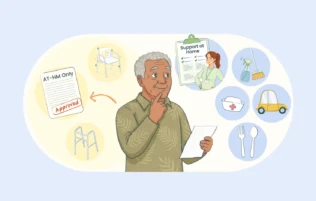
In Australia, the End-of-Life Pathway under Support at Home is designed exactly for this. It’s a fast-tracked funding stream for older Australians who have been given a life expectancy of three months or less and who want to spend that time at home. It provides $25,000 in dedicated funding, covers all clinical care costs (nursing, allied health, symptom management), and can be activated in days rather than the usual aged care timelines.
We’ve written a full walkthrough in Understanding the End-of-Life Pathway: Home Care for the Final Chapter – what’s covered, how to apply, what to expect.
For eligibility specifics, the funding breakdown, and a clear list of what sits inside clinical, independence, and everyday living services, see our End-of-Life Pathway page. It’s the most complete picture of how the pathway works in practice.
And if you’re earlier than that – if your loved one is unwell but not yet at the three-month stage, palliative care can begin much sooner. Palliative Care Australia defines it as care that helps people with a life-limiting illness “live as well as possible, for as long as possible.” It can sit alongside other treatments for months, or even years.
A Note for Carers, And a Note About the System
If you’ve already been told the system isn’t responding the way it should, or you’ve been knocked back on an assessment that didn’t reflect what’s actually going on – you’re not imagining it. We’ve written about what to do when the system fails you in When My Aged Care Gets It Wrong, and the same applies here. Advocate (you can use our free advocacy tool to write to your local MP here). Push back. Get a second opinion. The right care at the right time isn’t a luxury – it’s a right.
And for you, the carer: This is hard. Bone-tired hard. Lonely hard. The kind of hard that doesn’t show up in your inbox or your calendar but lives in your shoulders and your stomach and the way you’ve stopped sleeping properly. You don’t have to do this alone. Free, independent advocacy is available through the Older Persons Advocacy Network (OPAN) on 1800 700 600 – and counselling, peer support, and bereavement services exist for a reason, it’s important to be reminded that they’re only here for you to use them.
One Question, Asked Gently
There’s no perfect way to have this conversation. There’s no script that makes it not hurt. But there’s a version of it that happens at a kitchen table instead of a hospital bedside, in someone’s own time instead of someone else’s emergency.
It starts with one question, asked gently, and listened to fully: How would you like to spend the rest of your days?
About care and where they want to be, specifically:
- Where would you most like to be cared for – at home, or somewhere else?
- What does comfort mean to you? What would make you feel at peace?
- Are there treatments or interventions you’d want to avoid?
- Who do you want around you?
If you’re reading this, you already know it needs to happen. The hardest part is starting. Everything after that – the plan, the paperwork, the practical support – we can help you with, whenever you’re ready.
Whenever that is. 💙