A Quieter Kind of Lonely: What Genuinely Helps in Later Life
Loneliness in later life has a particular shape — quieter, harder to name. Here’s why it shifts, and the small things that genuinely help.
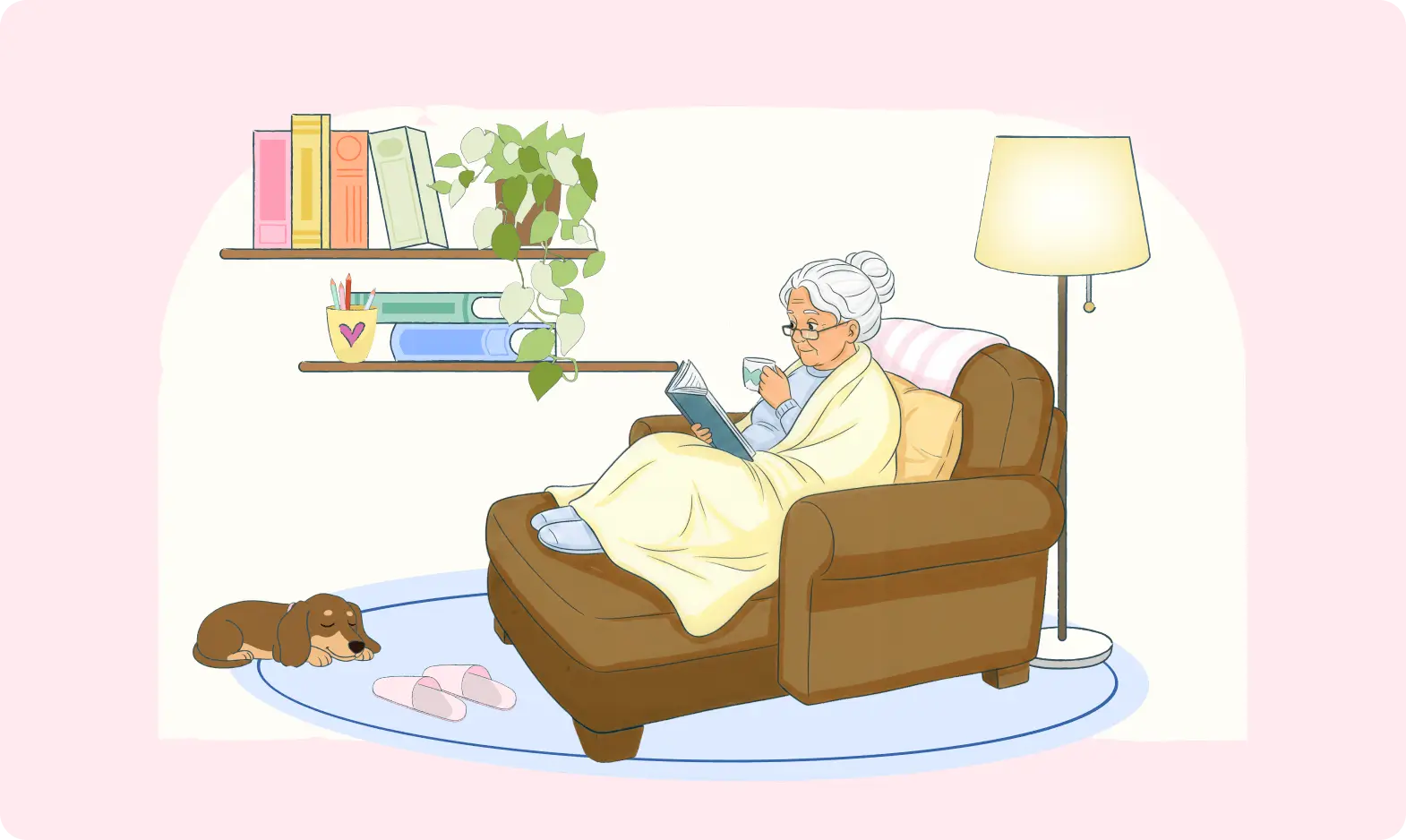
Sunday afternoon. The kettle’s on. The house is quiet. And then, suddenly, too quiet.
You might know this feeling. The one that arrives without warning, often after the grandkids have gone home, or the visitor’s car has pulled out of the driveway, or you’ve put the phone down after a short call that ended too soon.
It’s not the loneliness of being alone – most of us know how to be alone. It’s the loneliness of missing being needed. Of having space in your day that nobody seems to fill anymore. Of realising that the people you used to ring without thinking – your sister, your best friend from school, your husband… aren’t there to pick up.
Nobody talks about this kind of loneliness very much. It’s the quiet kind. The kind you don’t name because you don’t want to sound dramatic, or self-pitying, or like you’re complaining when really, your life is fine. You have your health (mostly), your house, your routine, and yet, if that’s you – even sometimes, this is for you.
The Shape of Loneliness in Later Life
That kind of connection isn’t easily replaced. And the world doesn’t make it easy to build new versions of it after 65.
Loneliness in later life is different from the loneliness of younger years. It isn’t usually about not having anyone. Most older Australians have family who love them, neighbours who wave hello, the GP who knows their name. It’s about losing the depth of connection – the people who knew you for forty years, who remembered your wedding, who understood without you having to explain.
The numbers, for what they’re worth: Australia has been quietly running its own loneliness epidemic for years. One in three Australians over 65 reports feeling lonely most of the time, according to recent Beyond Blue research.
It cuts across income, postcode, and family size. It’s not a failing. It’s a structural feature of getting older in a country that prioritises productivity, where retirement removes daily contact, mobility narrows what’s possible, and the friends you grew up with start, inevitably, to leave.
Why “Join A Club!” Rarely Fixes It
The standard advice for loneliness is, by now, a kind of well-meaning refrain: Join a club. Volunteer. Take a class. Get out more.
It’s not bad advice. It’s just incomplete.
Joining a group works when the loneliness you’re feeling is quantity loneliness – not enough people, not enough activity. But the loneliness of later life is often quality loneliness – you want depth, history, ease. You want someone who already knows you. And a bridge club on a Tuesday afternoon, however lovely, doesn’t deliver that on its own.
There’s also the energy cost nobody mentions. Showing up somewhere new – introducing yourself, making small talk, navigating a room of strangers… is enormously tiring, especially with mobility, hearing, or memory changes that make group settings hard.
Many older Australians go to one new group, find it exhausting, and decide they’re “just not a joiner.” They’re not. They’re depleted, and rightly so.
So the suggestions below are different. Some are slower, while some are smaller. Nevertheless, all of them are designed to build the depth of connection that the quick-fix advice can’t.
Five Things That Genuinely Help
1. Become a regular somewhere
Not a member. A regular. Whether that’s the café where the barista knows your name, the library where the staff wave when you walk in, or the walking route where the dog walkers nod each morning.
Regularness is what builds the kind of low-stakes belonging that loneliness erodes. You don’t have to make conversation, and you don’t have to perform connection. You just have to keep showing up, and slowly, the place becomes yours – and you become part of it.
Simply try this: Pick one location, go at the same time, and twice a week – give it three months, and notice how you feel better ingrained into your local community.
2. Make the call you almost don’t make
There’s a particular kind of call that older Australians often talk themselves out of: Ringing someone they haven’t spoken to in a while, because they probably won’t remember me, or they’ll think I’m being needy, or they’re busy with their own life.
Make the call anyway! Most of the time, the person on the other end hangs up smiling, and surprised, and grateful. Some of those calls turn into rebuilt friendships (some don’t), but every one of them disrupts the quiet a little.
If a phone call feels too much, a letter or a card is even more powerful. The letterbox is the most under-used connection technology we have, and surprisingly, now makes for a beautiful surprise for the recipient (because it’s so unexpected)!
3. Lean into one-to-one, not groups
If group settings are tiring (and they often are), find your connection in pairs. Walking with one friend, coffee with one neighbour, lunch with one daughter. The depth of connection you can build one-to-one is many multiples of what a group of ten produces in the same hour.
This is also where staying connected with your loved ones matters most – small, regular, no-occasion-required time, which is what keeps the deep relationships warm.
4. Allow yourself to be needed
There’s solid research on this: The antidote to loneliness isn’t always being with people – it’s being needed by them.
That might mean volunteering. It might mean mentoring a younger person in your field, even informally. It might mean being the person who remembers neighbour Jean’s surgery date and drops by with soup. It might mean caring for a pet.
The Japanese concept of ikigai, what you’re put here to contribute, sits right next to this idea. The need to feel useful doesn’t expire with retirement. If anything, it deepens.
5. Talk to your GP about it (yes, really)
Loneliness is now treated, in medical research, as a health condition on par with smoking 15 cigarettes a day in terms of mortality risk. That sounds dramatic, and it is, but it’s also the reason GPs are increasingly trained to ask about it.
If loneliness has been quietly settling in for months, name it at your next appointment. There’s no shame in this. There are real pathways available, everywhere from social prescribing programs, community connector services, even certain forms of group therapy specifically designed for older adults, all of which, your GP can refer you to.
Beyond Blue’s loneliness resources are also a good starting point if you’d like to read before you talk.
A note for daughters, sons, and carers
If you’re reading this because of a parent, because you’ve noticed the quiet creeping in, the phone calls getting shorter, the spark dimming – here’s the hardest thing to accept:
You can’t single-handedly cure a parent’s loneliness.
What you can do is one small thing, and it can be done well. Simply ring on a Tuesday at 4pm, every Tuesday, for three months. Drop in for fifteen minutes on the way home, but make it a regular fifteen minutes, not a sporadic visit. Send one specific photo a week – not a flood of family updates, just one small thing they can look at properly.
Consistency is more nourishing than intensity; a weekly fifteen minutes that’s guaranteed is worth more than an unannounced two-hour visit twice a year.
If you’d like more on what gentle, sustainable connection looks like in practice, our piece on 7 Self-Care Books to Help You Age with Vitality and Purpose and our Heartfelt Family Guide to Dementia Visits are both written with this in mind.
You Are Not the Only One Feeling This Way
Here’s the thing about loneliness in later life: Almost everyone you know is feeling some version of it (and not just in later life, it can affect anyone at any stage of life).
It’s the woman next door, the man at the end of the row in church, the close friend from your former job that you suddenly stopped hearing from. All of these people, quietly, are sitting with their own version of the too-quiet Sunday.
Which means that the next call, the next note, the next I was thinking of you – sent without occasion, without agenda, without needing a reply, is almost certainly going to land in someone who needs to hear it.
You don’t have to fix loneliness, you just have to disrupt it a little – and we all play an important part in that. That’s the work of a lifetime, and it’s quietly worth doing.
So if the kettle’s on, maybe let’s make that call?
And if you ever need to call someone to help you navigate your aged care journey with greater clarity, confidence, and support, we’re always here to answer (and to CareAbout you).