



How to Help A Loved One While Respecting Their Independence

Because there’s a way to step in without stepping on anybody’s toes.
It often begins slowly—first, you notice your loved one isn’t quite responding like they normally would, the laundry starts to pile up, the garden seems neglected, they’ve lost a bit of weight, or maybe it’s just the small things that they’re starting to forget.
And of course, whenever you try to gently ask if they need help, the answer is swift:
“I’m fine.”
Maybe they are fine (for the most part), but you still can’t shake the feeling that things are getting harder for them and naturally, heavier for you.
So, how do you support someone you love while still honouring their independence and dignity?
Let’s talk about it.
Why so many older Australians resist help
It’s not stubbornness (okay, sometimes it is). More often than not, it’s plain fear. The fear of losing control, the fear of being a burden, or just the fear of being “put in a home.”
For anyone who’s spent a lifetime doing things their own way, it’s only natural that the idea of change might feel like giving something up (or even worse, losing one’s identity).
But here’s the truth: it’s not about giving up, it’s about having your back covered. Getting support isn’t about losing independence—it’s finding how to keep it.
Here’s how to gently help (without taking over)
1. Start from a place of understanding, not rescue
Avoid swooping in with fixes. Instead, ask questions that open up the conversation:
- “How’s everything been lately—has anything been feeling a bit harder than usual?”
- “Is there anything you could use—just to make your day a little bit easier?”
- “If you could get back some of that time and energy spent—how would you spend it?”
When we shift the focus from a problem to a possibility, the whole conversation changes.
Instead of making a person feel hindered by current resources, work to make them feel empowered by the prospect of choices.
2. Make it about them (not how you’re feeling)
It’s tempting to say, “I’m worried,” but depending on a person’s tone and how it’s received—that opening may sound like a criticism. Instead, try something along the lines of:
“I’ve been thinking about how you could keep doing the things you love, just with a bit more support around the edges.”
Using statements like these shows that your care comes from a genuine place—not to take over, but to give them more time for what really matters.
3. Offer choice, not ultimatums
Suggest options, not outcomes. “Would you feel more comfortable if someone helped with the cleaning once or twice a week?” is a lot better received than “You need help.”
The more ownership they feel, the more open they’ll be.
How to softly approach the Home Care conversation
When they know it’s time for that helping hand, there is government funding available. We understand, a Home Care Package (HCP) is a government-funded support system designed to help older Australians stay in their homes longer.
But as soon as the words ‘home care’ come up, it’s natural for someone unfamiliar with this term to make assumptions about what it means—and what’s really being suggested.
Here’s how you could position this chat:
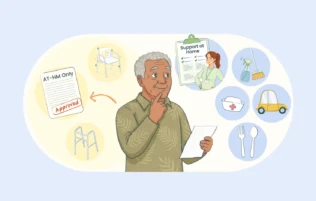
“There’s funding available to help you stay comfortably at home. Whether that’s an extra hand with the cleaning, transport, meals, even personal care—for whatever you need, there’s someone to help you… if you want it? You don’t have to use the support now, but you could be waiting up to a year until funding’s available. So, if you change your mind further down the track—it doesn’t hurt to apply early? The choice is completely yours.”
Because ultimately, it is their choice to make. That’s why it’s best to always allow your loved one time to think it over—after all, you’re not here to force anything, you’re here to invite them to consider it.
Need backup? You’ve got us.
Sometimes, the best way to avoid friction is to have someone else in your corner. Our CareAbout team is professionally trained to speak on your behalf.
At CareAbout, we help families navigate this balancing act:
- We explain how support works, in clear, friendly terms
- We match your loved one with a provider who respects their routines and personality
- We make sure they stay in the driver’s seat
- We help you stay informed and supported, too (because we understand how this journey affects everyone involved)
And we provide this service completely free – simply call us today at 13 13 00 to open the conversation.
We’re here to CareAbout you—and at no cost.