The Gentle Release: Why Your Joints Crave Hydration and Heat
For many of us, the first few minutes of the day feel less like a fresh start and more like a slow “thaw.” It’s that familiar, stubborn resistance in the knees, the tightness in the lower back, or the way fingers feel just a little too sluggish to grip a morning cup of tea. In Australia, where morning temperatures can nip at the air even in the milder months, this “rusty hinge” feeling is a daily reality for many older adults.
When we talk about mobility, the conversation usually turns toward things that feel like work: Physiotherapy exercises, brisk walks, or dedicated stretching routines. While these practices are vital, there is a quieter, more foundational layer to movement that we often overlook. It isn’t found in a gym, but rather in two of the simplest elements of life: Hydration, and heat.
The Science of Internal Cushioning: Why Hydration is Your Joints’ Best Friend
To understand why a glass of water matters for your movement, it helps to look inside the joint itself. Our joints are cushioned by a remarkable substance called synovial fluid. You can think of this as your body’s natural “engine oil.” Its job is to reduce friction, absorb shock, and keep the cartilage between your bones from rubbing together.
As we age, our bodies naturally lose their sense of thirst, meaning many of us are living in a state of mild, chronic dehydration without even realising it. When we aren’t drinking enough, that synovial fluid can thin out or lose its volume. This is when the “sponge” effect comes into play: A wet sponge is springy and flexible, while a dry one is brittle and hard. By the time you feel thirsty, your joints may have been “running dry” for hours.
Nourishing your mobility from the inside doesn’t have to be a chore. It is often more effective to think of hydration as a slow, steady trickle rather than a sudden drenching. Integrating water-rich foods – like a crisp slice of melon, a bowl of clear soup, or a refreshing cucumber salad – can be just as beneficial as a glass of water. When the body is properly hydrated, the “oil” in your joints stays thick and cushiony, making every step feel just a bit more padded and every reach a little less strained; not to mention, it’s integral to fall prevention.

The Internal Thaw: How Warmth Unlocks the Body
If hydration is the oil for the hinges, warmth is the “thaw” for the metal. There is a very real biological reason why cold mornings make us feel stiffer. When we are cold, our blood vessels constrict, and our muscles naturally tighten to conserve heat. For someone managing arthritis or old injuries, this contraction can feel like being wrapped in a suit that is two sizes too small.
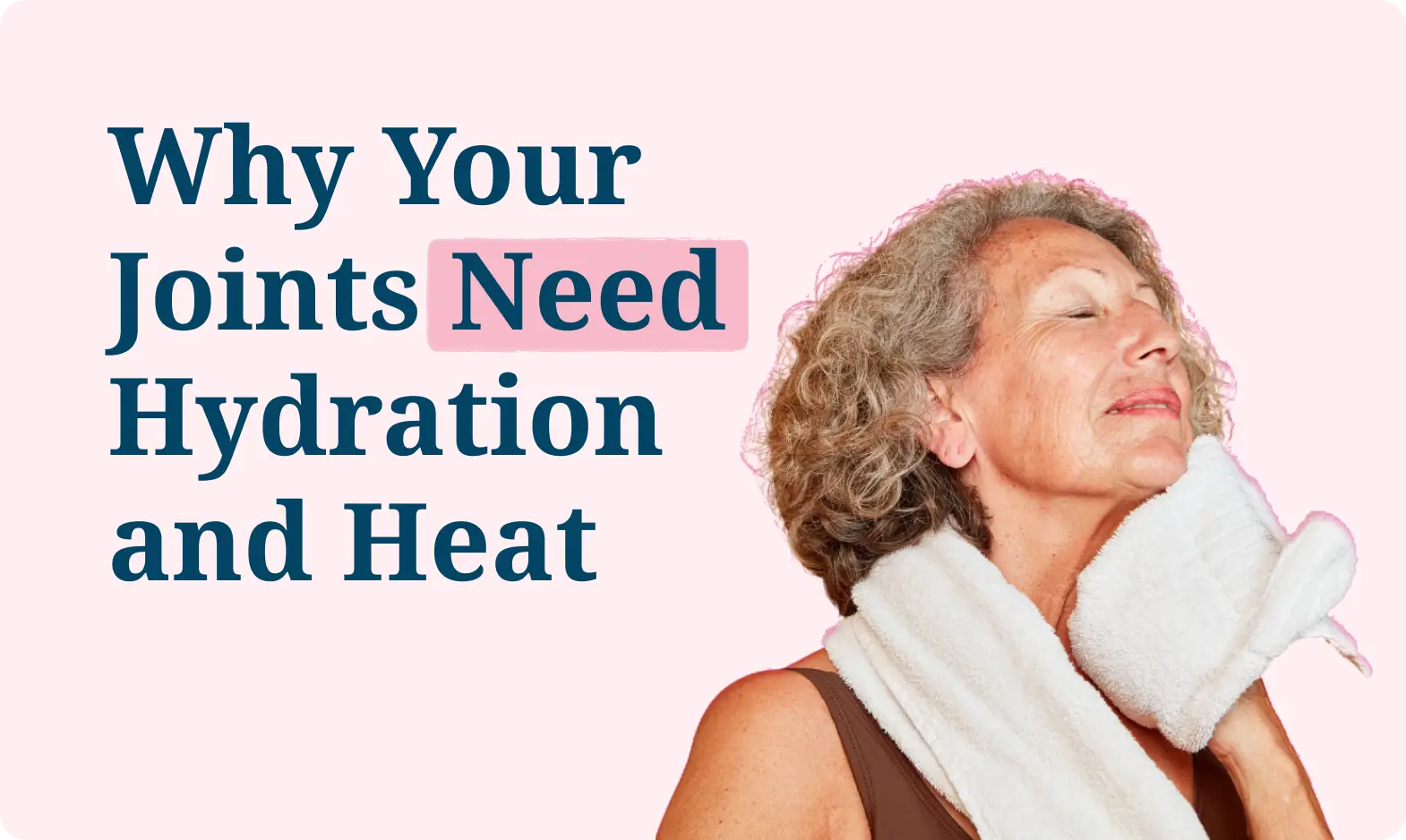
Applying heat is more than just a comfort; it is a mechanical release. When you use a warm wheat pack or soak in a gentle bath, you are performing “vasodilation” – the widening of your blood vessels. This sends a rush of oxygen-rich blood to your tired muscles, telling them they no longer need to hold so much tension. This increased circulation also makes your connective tissues more elastic, meaning they can stretch further without the “snap” of pain.
Creating a “warmth ritual” can change the trajectory of your day. Whether it’s the steamy air of a morning shower or the weight of a heated blanket while you read the paper, these moments of warmth act as a “pre-warm-up.” They prepare the body to move by softening the fibers of the muscles, making it much easier to transition from the armchair to the garden.
For those looking to take this “internal thaw” a step further, more immersive environments can offer a powerful synergy of heat and hydration. Taking your routine beyond the kitchen or the living room allows you to harness deeper biological triggers for movement.
The Deep Heat of Saunas
Saunas provide a penetrating warmth that reaches far beyond the surface of the skin. By raising your core temperature, they encourage a level of cellular relaxation and circulation that a simple heat pack cannot replicate.
- Infrared Saunas: These use light to heat the body directly rather than just the air, allowing for a gentler, more tolerable heat that penetrates deeper into muscle tissue and stiff joints.
- Traditional Steam Saunas: These combine high heat with humidity, helping to open the airways and induce a deep sweat that assists in the body’s natural detoxification process.
- Circulatory Boost: The intense warmth acts as a “vascular workout,” dilating blood vessels and rushing oxygen-rich blood to areas of chronic tightness.
The Weightless Relief of Hydrotherapy
Hydrotherapy pools serve as a sanctuary for the “rusty” joint, combining the benefits of warmth with the physical properties of water. They allow for a range of motion that might feel impossible on dry land.
- Buoyancy and Support: Being in a hydro pool effectively “lifts” the weight of gravity off your frame, reducing the load on knees, hips, and ankles by up to 90%.
- Hydrostatic Pressure: The gentle pressure of the water against the skin helps to reduce swelling and inflammation in the limbs while supporting better circulation.
- Warm Water Movement: Typically kept between 33°C and 36°C, these pools “wash” the joints in consistent warmth, softening connective tissues and allowing for fluid, pain-free stretching.
Whether it is the dry heat of a sauna or the supportive embrace of a warm-water pool, these immersive practices act as a total-body invitation to let go of guarded tension. By integrating these “warmth rituals,” you can effectively lubricate your joints from the outside in, making the transition to daily activity feel less like a struggle and more like a natural flow.
The Synergy of Movement
When you combine a hydrated body with a warm one, you create a window of opportunity. This is the “golden hour” for gentle movement. You don’t need to embark on a strenuous workout; in fact, your body often responds better to small, mindful gestures. A few slow shoulder rolls after a warm cup of herbal tea, or circling your ankles while you’re still tucked under the covers, can help “stir” that synovial fluid and keep the stiffness from settling back in.
A nice little add-on? Throw one of those immunity boosters into your tea or next meal, and you’ll feel even more energised. If you’ve been looking to spice up your cooking, these ten herbs and spices are sure to do the trick.
Ultimately, staying mobile isn’t always about pushing your limits. Often, it is about listening to the quiet needs of your body. By treating hydration and warmth as essential parts of your day, rather than just afterthoughts, you aren’t just managing stiffness; you are giving your body the grace it needs to move with ease.
Next time you feel that familiar creak, remember that the most powerful tools for comfort are often the ones sitting right in your kitchen or draped over the back of your sofa.