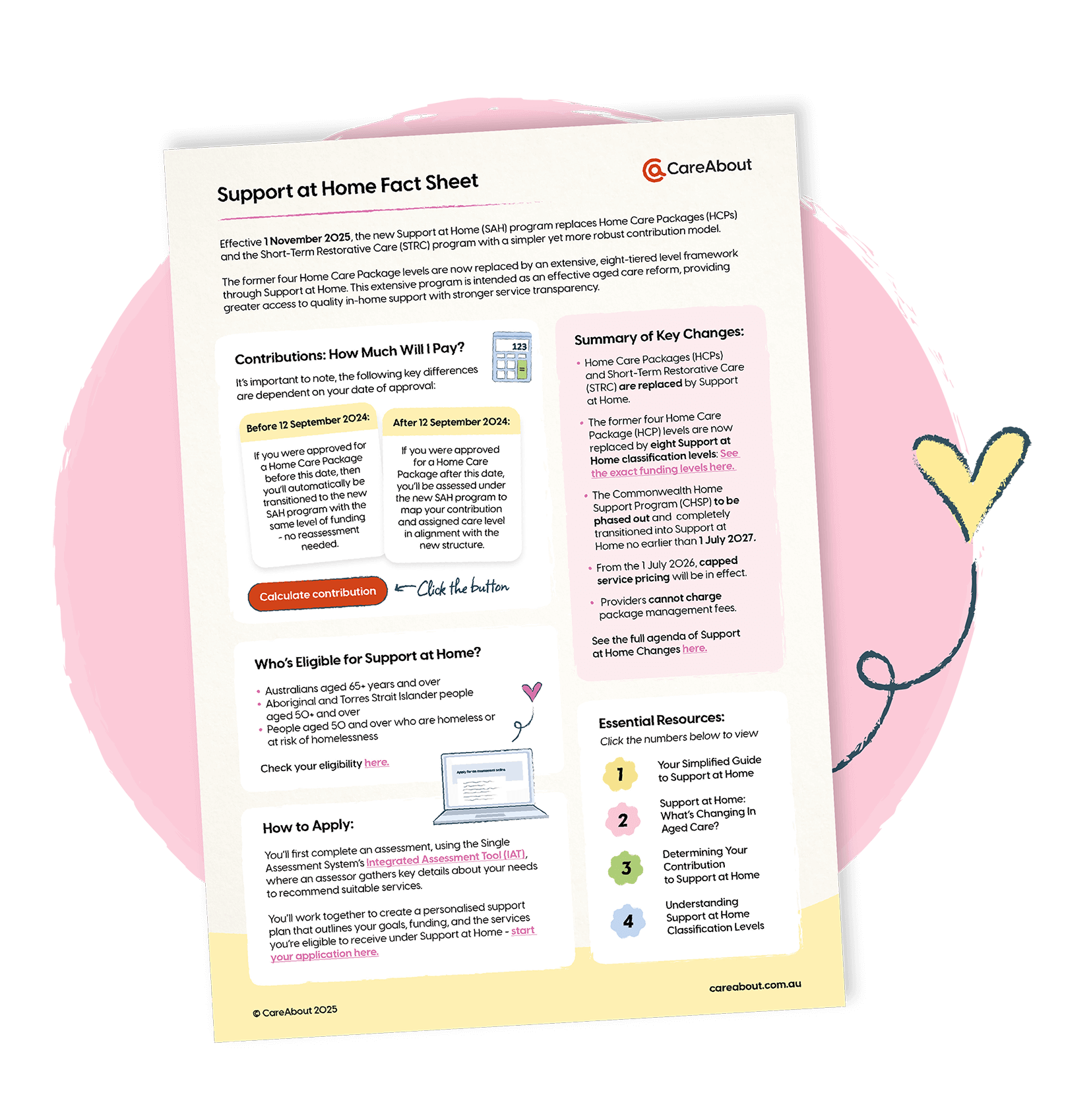
Support at Home Classification 1 is the entry point to Australia’s new Support at Home Program. It’s designed for older people who are mostly independent but would benefit from a little help with daily tasks to stay safe, comfortable, and connected at home.
Support at Home now offers eight classification levels, replacing the previous four Home Care Package tiers. This shift is part of broader Support at Home changes aimed at delivering more flexible, tailored care that adapts as your needs change.
Who Is the Support at Home Classification Level 1 For?
The Support at Home Classification 1 suits older Australians who wish to stay in their own homes but benefit from just a little support to make life easier. It’s designed for people who are still largely independent but could use a helping hand now and then.
It suits those who may find certain tasks tiring, need occasional reminders, or simply want a bit of extra support to stay on top of things at home. This level of care can make a big difference in staying well, avoiding accidents, and feeling more confident day to day without giving up your independence.
You may be suited to Support at Home Classification 1 if you:
- You may be suited to Support at Home Classification 1 if you:
- Live alone or don’t have regular help from friends or family
- Have mild mobility issues or feel more fatigued than you used to
- Find household chores harder than before
- Occasionally forget to take medication or eat regularly
- Want a friendly check-in or someone to help keep your routine on track
What Does Support at Home Classification 1 Cover?
Support at Home Classification 1 doesn’t take over. It simply steps in where it counts, helping you stay comfortable, safe, and independent for longer. Here’s what this looks like in real life:
Light Personal Care
A little assistance can go a long way in keeping daily routines manageable and dignified. This could include:
- Support with showering or bathing safely.
- Help with dressing and undressing
- Assistance with brushing hair, shaving, or other grooming tasks
Household Help
Light home maintenance that helps keep your living space safe and manageable. This could include:
- Vacuuming, dusting, and general surface cleaning
- Laundry and bed linen changes
- Taking out rubbish and recycling
Help with Meals
Ensures nutrition and routine without the effort of full meal prep every day. This could include:
- Assistance with simple meal preparation
- Reheating pre-cooked meals or leftovers
- Reminders to eat regularly and stay hydrated
Medication Reminders
A gentle nudge to help stay on track with prescriptions.
Friendly Check-Ins and Company
A familiar face and regular contact can make a big difference.
Quick Safety and Wellbeing Checks
Simple checks to help catch potential risks early. This could include:
- Verifying heating, lighting, and essential appliances are working
- Checking pantry or fridge for essentials
- Spotting early signs of health or memory changes

Example: Meet Frank
Frank is 79 and lives on his own in a small unit. He’s active in his local men’s shed and still drives, but arthritis makes housework tough and he sometimes skips meals when he’s tired. His daughter noticed he was wearing the same clothes a few days in a row and was forgetting to take his medication on time.
With the Support at Home Classification 1, a care worker now visits twice a week to:
- Help with laundry and change bed linen
- Reheat meals and check the fridge is stocked
- Prompt Frank to take his medication
- Have a relaxed chat and check Frank’s doing okay
This small but regular support helps Frank feel more organised and less overwhelmed, while giving his family peace of mind that he’s staying safe and well in his own space.
How to Apply for Support at Home Classification 1
Applying for Support at Home Classification 1 is straightforward, and you don’t need to do it alone. Here’s how to get started:
1. Register with My Aged Care
Begin by getting in touch with My Aged Care – the government’s central point for aged care services.
A quick initial screening will confirm if you’re eligible for a formal assessment
Register online at myagedcare.gov.au or call 1800 200 422
2. Complete Your Aged Care Assessment
If eligible, you’ll be referred for a full in-home assessment using the Integrated Assessment Tool (IAT).
This assessment looks at your current health, mobility, home setup, and support needs
You may have a friend, family member, or advocate with you during the assessment
3. Receive Your Personalised Support Plan
After your assessment, you’ll receive a Notice of Decision that includes:
Your Support at Home classification and the level of funding assigned
A care plan that outlines recommended services and goals
Information about short-term supports if applicable
4. Enter the Priority System
Your care needs will be ranked as urgent, high, medium, or standard. This determines how quickly you receive funding.
5. Choose a Provider and Start Services
Once your funding becomes available you’ll have 56 days (or up to 84 days with an extension) to choose an approved provider