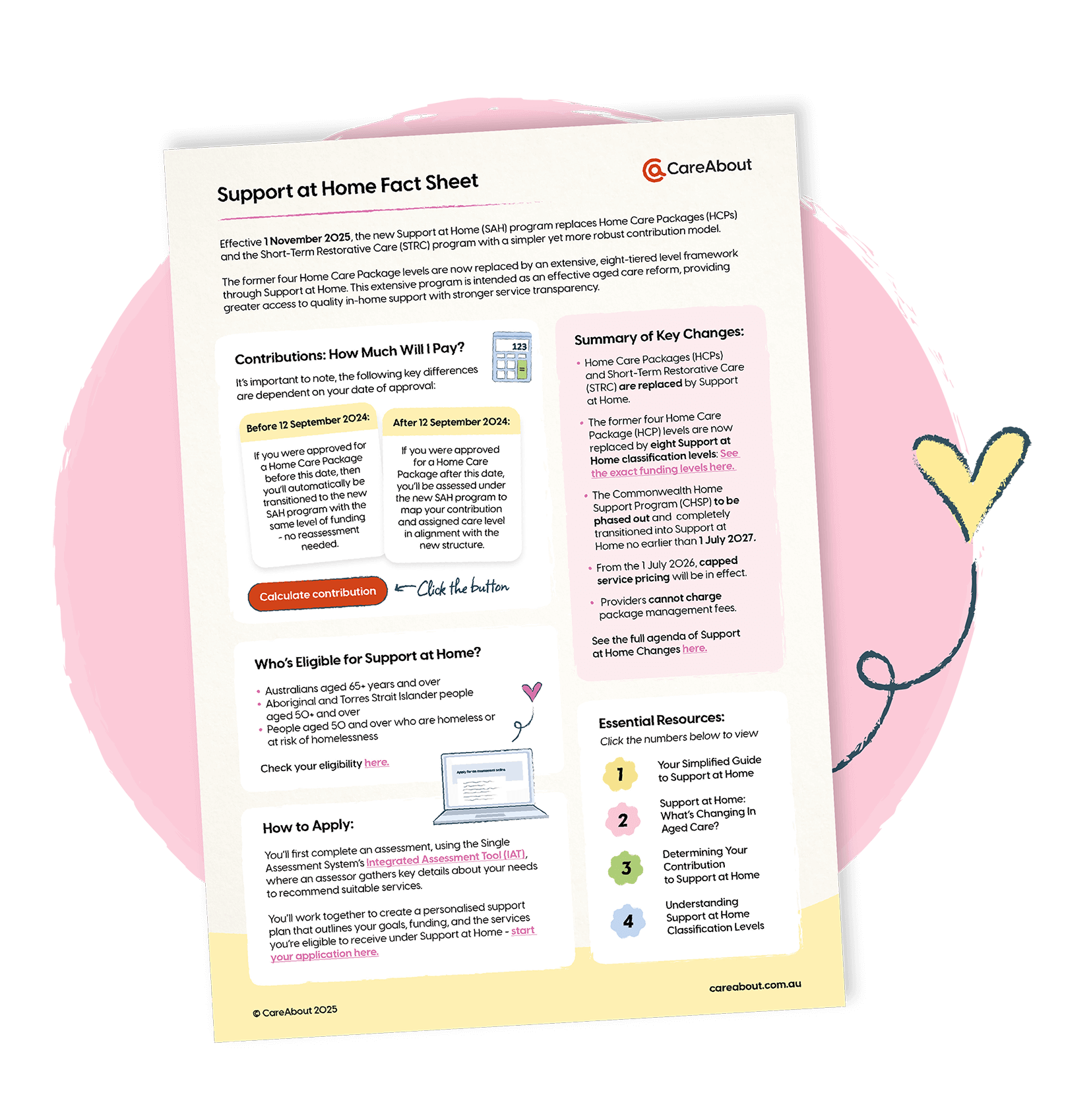
Support at Home Classification 3 is one of eight funding levels introduced as part of the new Support at Home changes from 1 November 2025. With a quarterly budget of $5,491.67 (or $21,966.70 annually), it provides the financial support needed for moderate, routine care.
This includes help with personal hygiene, mobility support, regular meal prep, assistance with medications, and some basic clinical care such as wound dressing or monitoring health changes. The goal is to empower people to live safely at home with a strong level of ongoing support.
Who is Support at Home Classification 3 For?
You may be suited to Support at Home Classification 3 if you:
- Need help with daily personal care such as showering or dressing
- Require regular assistance with meals, cleaning, and medication
- Live with a chronic condition that needs monitoring, but not complex care
- Benefit from companionship and support to reduce isolation
- Have experienced recent health changes or reduced mobility
What Does Support at Home Classification 3 Cover?
The care provided under Classification 3 is more comprehensive and frequent than lower levels. Here’s what may be covered:
Personal Care
- Regular assistance with bathing, dressing, and grooming
- Help with toileting and continence support
- Support with walking or transferring (e.g., bed to chair)
Meal Preparation and Nutrition
- Frequent meal planning and preparation
- Ensuring regular food and water intake
- Grocery shopping or delivery support
Household Support
- Cleaning the kitchen, bathroom, and living areas
- Doing laundry, changing linen, and managing clutter
- Help managing bills or organising appointments
Health Monitoring and Medication Support
- Assistance with wound care or dressing changes
- Support with medication routines and prescription refills
- Monitoring vital signs or health changes (if trained)
Social and Community Connection
- Companionship during regular visits
- Accompaniment to medical appointments or community groups
- Light exercise or activities to maintain wellbeing
Safety Checks
- Fall risk assessments and mobility aids
- Checking the home for hazards
- Ensuring heating, lighting, and essentials are working

Example: Meet Rosa
Rosa is 81 and lives alone after her husband passed away. She manages her finances and enjoys gardening, but arthritis makes it hard to clean and she recently fell in the bathroom. Her GP noticed a slow-healing wound on her leg and recommended regular monitoring.
With Support at Home Classification 3, Rosa receives visits four times a week to:
- Help with showering and the application of wound dressings
- Prepare her lunch and ensure she’s drinking enough water
- Keep the bathroom and kitchen clean and safe
- Walk with her to the community centre twice a week
This level of care allows Rosa to stay confident and safe in her home, while her children are reassured she’s well supported.
Budget and Funding for Support at Home Classification 3
Support at Home budgets are managed quarterly by Services Australia, with funding tailored to your assessed classification.
How to Apply for Support at Home Classification 3
Applying for Support at Home is straightforward, and you don’t need to navigate it alone. Here’s what to expect:
1. Register with My Aged Care
Begin by getting in touch with My Aged Care – the government’s central point for aged care services.
A quick initial screening will confirm if you’re eligible for a formal assessment
Register online at myagedcare.gov.au or call 1800 200 422
2. Complete Your Aged Care Assessment
If eligible, you’ll be referred for a full in-home assessment using the Integrated Assessment Tool (IAT).
This assessment looks at your current health, mobility, home setup, and support needs
You may have a friend, family member, or advocate with you during the assessment
3. Receive Your Personalised Support Plan
After your assessment, you’ll receive a Notice of Decision that includes:
Your Support at Home classification and the level of funding assigned
A care plan that outlines recommended services and goals
Information about short-term supports if applicable
4. Enter the Priority System
Your care needs will be ranked as urgent, high, medium, or standard. This determines how quickly you receive funding.
5. Choose a Provider and Start Services
Once your funding becomes available you’ll have 56 days (or up to 84 days with an extension) to choose an approved provider