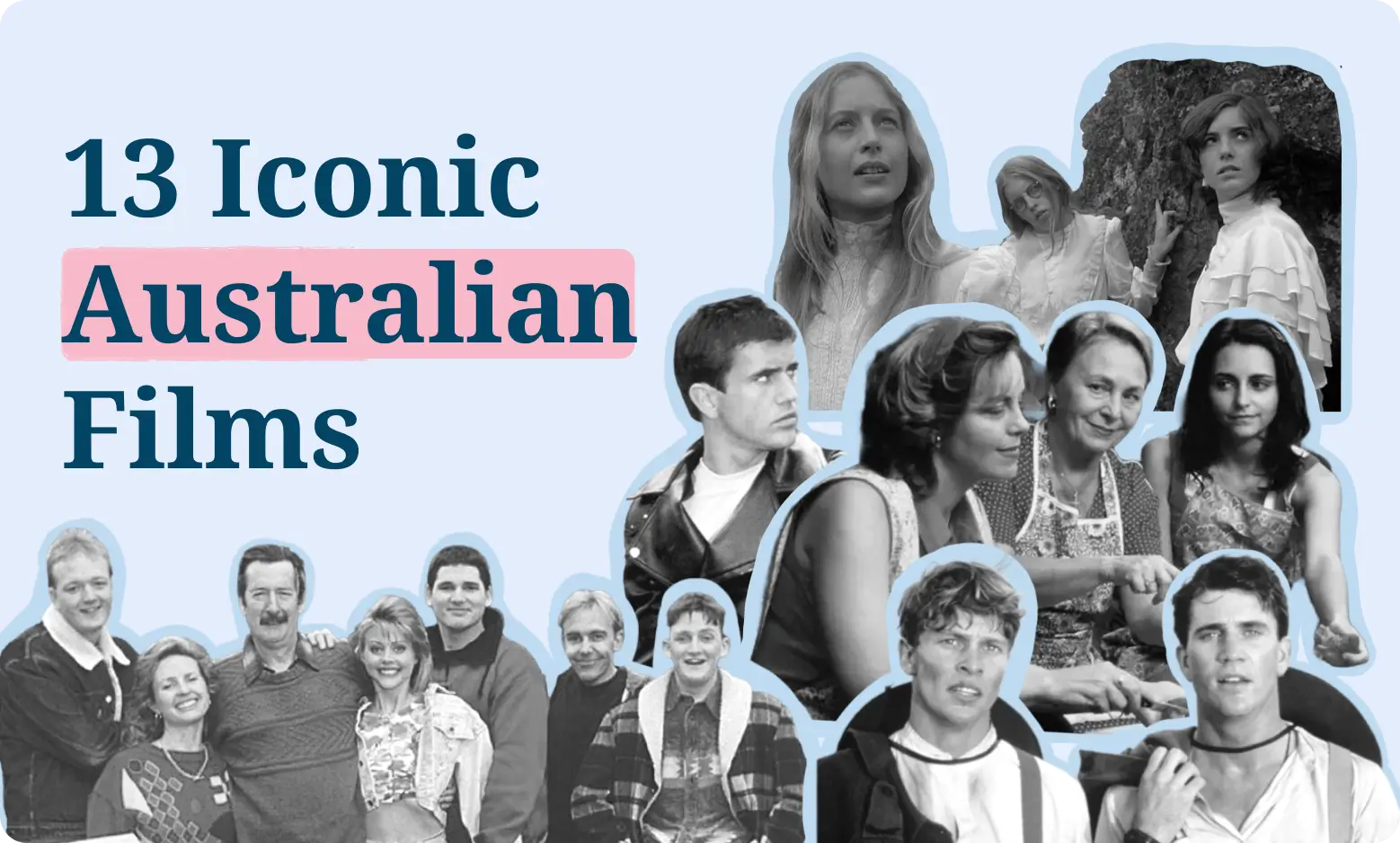
This Australia Day, we take a trip down memory lane to celebrate the films that didn’t just entertain us in cinemas – they shaped who we are as a nation.
From the sun-scorched highways of Mad Max to the glittering drag queens of Priscilla, from the haunting mystery of Hanging Rock to the suburban battlers of The Castle, Australian cinema has given us stories that reflect our complexities, our humour, our history, our darkness, and our dreams.
Australian cinema has always punched above its weight. With relatively modest budgets and a fraction of Hollywood’s resources, our filmmakers have crafted stories that resonate far beyond our shores – yet remain unmistakably, undeniably ours. Whether it’s the larrikin humour that makes us quote The Castle at every barbecue, the unflinching examination of our colonial past in hard-hitting films like Rabbit-Proof Fence, or the sheer audacity of sending a bus full of drag queens across the outback (Priscilla, Queen of the Desert), each and every one of the following films, while different, share this one thing in common: They’ve left an indelible mark on our cultural landscape.
Some made us laugh until our sides hurt. Others forced us to confront uncomfortable truths about our history. A few launched international careers and put Australian talent on the world stage… and many, did all three. These aren’t necessarily the “best” Australian films ever made (though many would make that list too) – they’re the ones that mattered. The ones that started conversations. The ones that made us see ourselves, our land, and our stories differently. From the Australian New Wave of the 1970s to the multicultural coming-of-age tales of the 2000s, this is Australian cinema at its most influential, most quotable, and most unforgettable.
These aren’t just movies; they’re cultural touchstones that sparked conversations around dinner tables, defined generations, and showed the world what it means to be Australian (in all our flawed and funny yet fierce glory). So grab a cold one, settle in, and let’s revisit the 13 iconic films that belong in every Australian’s heart.
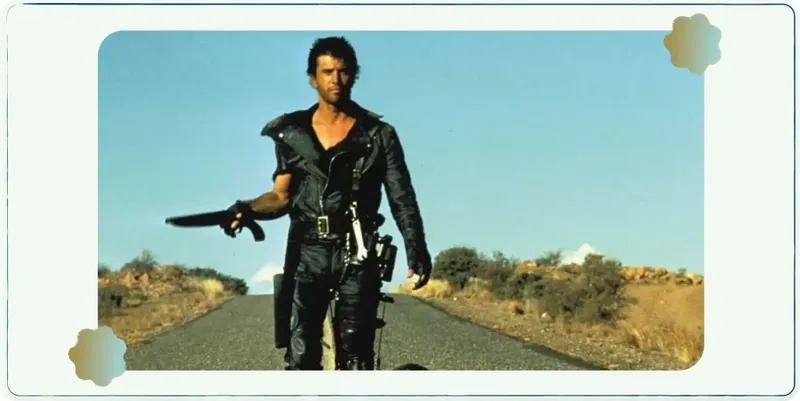
1. Mad Max (1979)
Before he was a Hollywood megastar, Mel Gibson was a young Victorian cop in leather, roaring down dusty highways in a Pursuit Special that became more iconic than most actors. George Miller took a shoestring budget and created visceral, high-octane cinema that put Australia on the action movie map. The film’s dystopian vision of societal collapse felt uncomfortably plausible, and those vehicle stunts (done in real life with no CGI safety nets) – still pack a loaded punch. It’s raw, violent, and undeniably Australian in its sun-scorched nihilism.
2. Picnic at Hanging Rock (1975)
Peter Weir’s dreamy, unsettling masterpiece remains as enigmatic as the day it was released. When three schoolgirls vanish on Valentine’s Day, 1900, Weir refuses to give us answers, instead weaving a hypnotic meditation on the clash between Victorian corsets and the ancient, indifferent Australian landscape. Miranda’s ethereal ascent up the rock still haunts, and that Gheorghe Zamfir panflute score? Unforgettable. It’s less a “whodunit” and more a “what-the-hell-happened,” proving that sometimes the questions matter more than the answers.
3. Gallipoli (1981)
Peter Weir breaks your heart in two halves: The first, a sun-drenched ode to youthful optimism and mateship as Archy and Frank race across Western Australia; the second, the senseless slaughter of Gallipoli’s trenches. Mark Lee and Mel Gibson are achingly good as the sprinters turned soldiers, and Weir doesn’t flinch from showing how the British command treated ANZACs as cannon fodder. That final freeze-frame as Archy goes over the top is seared into Australian consciousness – a devastating indictment of war and a tribute to those who never came home.
4. Breaker Morant (1980)
Bruce Beresford’s courtroom drama crackles with moral complexity and righteous anger. Based on the true story of Australian soldiers court-martialed during the Boer War for executing prisoners, the film asks uncomfortable questions about following orders, colonial warfare, and who gets thrown under the bus when things go wrong. Edward Woodward is magnificent as the poet-turned-soldier facing a kangaroo court, and the film’s anti-authoritarian streak resonates deeply with Australian sensibilities. “Rule 303” became part of our cultural lexicon, for better or worse.
5. The Castle (1997)
“Tell him he’s dreaming!” Working Dog’s low-budget larrikin comedy became the most quotable film in Australian history, and deservedly so. When people ask about Australian cinema, The Castle is always mentioned! Michael Caton’s Darryl Kerrigan fighting to save his beloved house next to the airport is pure Australian battler mythology, celebrating the suburban dream with genuine affection rather than mockery. The jokes about greyhounds, powerlines, and “the vibe” capture something essential about Australian humour – self-deprecating, warm, and suspicious of tall poppies. It cost nothing, made millions, and proved you don’t need Hollywood budgets to capture Australian hearts.
6. Muriel’s Wedding (1994)
P.J. Hogan’s tragicomic gem is far darker than you remember – beneath the ABBA singalongs and Toni Collette’s luminous breakthrough performance lies a savage critique of small-town cruelty, toxic friendships, and the lies we tell ourselves. Muriel’s journey from Porpoise Spit to Sydney is both hilarious and heartbreaking, and the film never lets its mean girls off the hook. Rachel Griffiths matches Collette beat for beat as the irrepressible Rhonda, and their friendship becomes the film’s true love story. It’s funny until it’s devastating (then funny again).
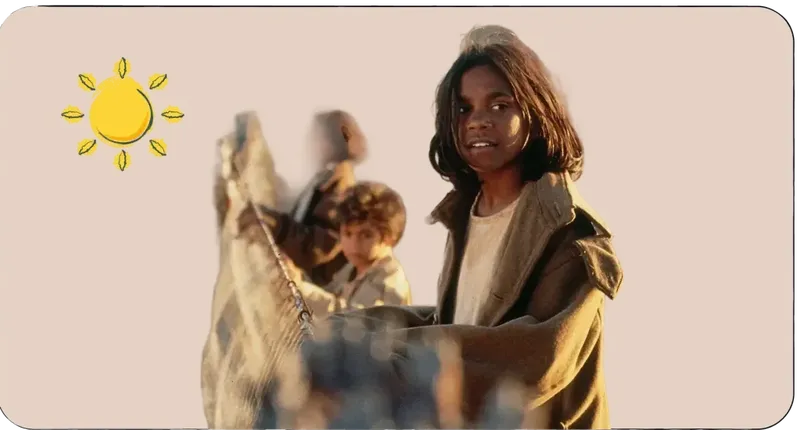
7. Rabit-Proof Fence (2002)
Phillip Noyce strips the Stolen Generations story to its essentials: Three young girls, 1,500 miles of outback, and an unbreakable will to get home. Everlyn Sampi, Tianna Sansbury, and Laura Monaghan carry the film with quiet dignity, while Kenneth Branagh’s Chief Protector A.O. Neville embodies the banality of bureaucratic evil. The film brought this shameful chapter of our history into mainstream consciousness without sensationalism – just the devastating truth of children ripped from their families in the ugly name of assimilation. Peter Gabriel’s score soars alongside the fence that became their lifeline home.
8. Crocodile Dundee (1986)
Paul Hogan’s larrikin bushman charmed the entire world and single-handedly boosted Australian tourism for a decade. Sure, it’s broad comedy – “That’s not a knife” became every tourist’s favourite line – but there’s genuine wit in the fish-out-of-water reversal as Mick navigates New York with more savvy than the city slickers expect. Linda Kozlowski is game as the journalist Sue, and their chemistry sells the romance. It made $328 million worldwide on a $8.8 million budget, proving the world was hungry for Australia’s knockabout humour and rugged charm.
9. The Proposition (2005)
Nick Cave and John Hillcoat dragged the Australian Western into the blood-red dust and refused to romanticise a thing. Guy Pearce’s outlaw Charlie Burns faces an impossible choice – kill his psychopathic older brother or watch his younger brother hang. The brutality is unflinching, the landscape unforgiving, and the colonial violence sickeningly realistic. Ray Winstone’s captain tries to bring civilisation to the outback and fails spectacularly. Cave’s script and score are both magnificent, creating a uniquely Australian gothic that feels like our answer to Cormac McCarthy.
10. Lantana (2001)
Ray Lawrence’s sophisticated ensemble drama weaves together love, marriage, betrayal, and grief with a delicacy rare in Australian cinema. Anthony LaPaglia and Kerry Armstrong are devastating as a couple whose marriage is quietly dying, while Barbara Hershey’s grieving psychiatrist holds the fractured narrative together. The Sydney setting of suburban streets, coastal walks, and the titular lantana bush hiding secrets, becomes a character itself. It’s grown-up filmmaking that trusts its audience, with performances so naturalistic that you forget you’re watching fiction. Criminally underrated internationally, rightly beloved here.
11. The Adventures of Priscilla, Queen of the Desert (1994)
Stephan Elliott’s glitter-bombed road movie sent three drag queens across the outback in a bus named Priscilla and changed Australian cinema forever. Terence Stamp, Hugo Weaving, and Guy Pearce camp it up magnificently, but beneath the sequins and ABBA anthems lies a genuinely moving story about acceptance, found family, and claiming space in a country that wasn’t always welcoming. Lizzy Gardiner’s costume design (including that Oscar-winning flip-flop dress) is audacious genius. From homophobic small towns to surprising allies, the film captures both Australia’s ugliness and its capacity for warmth.
12. Shine (1996)
Scott Hicks’ biographical drama about pianist David Helfgott could have been maudlin Awards bait, but Geoffrey Rush’s Oscar-winning performance is so lived-in, so electrically vulnerable, that it transcends the biopic formula. The film moves between Helfgott’s traumatic childhood, his breakdown after performing Rachmaninoff’s Third Concerto, and his later-life renaissance with tenderness and respect. Rush makes you believe every moment – the genius, the madness, the damage, the healing. It reminded the world that Australian actors could hold their own with anyone, and proved our stories of triumph over trauma could resonate globally.
13. Looking for Alibrandi (2000)
Kate Woods’ adaptation of Melina Marchetta’s beloved novel became a rite of passage for a generation of young Australians, particularly those from migrant families. Pia Miranda is pitch-perfect as Josie Alibrandi, an Italian-Australian teenager navigating HSC pressure, family secrets, first love, and the weight of cultural expectations in Sydney’s inner west. The film speaks honestly about what it means to be caught between worlds – too Australian for Nonna, while too ethnic for the snobbish girls at her private school. It’s funny, heartfelt, and unafraid to tackle suicide, illegitimacy, and the complicated legacy of immigration. For multicultural Australia, this was finally seeing ourselves on screen – messy families, passionate arguments, and all.
Happy Viewing!